
RULE ZERO. read this first.
Rule-zero script, zero-Game-Changer disclosure, the three no-combo win lanes, and the Skullclamp answer for a Bracket 2 Golgari Elf pod.
Bracket 2 readout.
Say before shuffling up
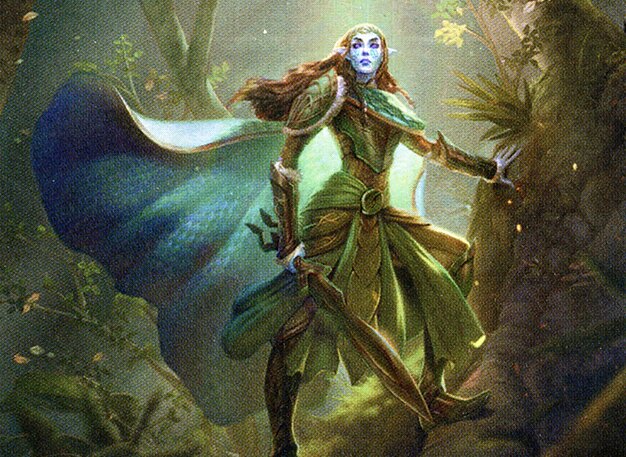
Bracket 2 Golgari Elf tribal on Lathril, Blade of the Elves. This is Hunter's deck. Zero Game Changers, no infinite combos, no tutors beyond land-fetch value, no land destruction, no extra turns. The deck goes wide with Elves, then taps ten untapped Elves so each opponent loses 10 and Hunter gains 10, or swings wide under Coat of Arms. Average kill turn 8 to 10.
decks.cdubgames.com/lathril-elves/tournament-2/
Table disclosures
Read this before sitting down at a Bracket 2Bracket is a deck-power tier system from Bracket 1 (casual precons) to Bracket 5 (cEDH). Bracket 2 is Core, the casual precon-level baseline. Lathril pod. The pregame above is the script Hunter reads out loud. The compliance is what to volunteer if asked. The Q&A handles the specific questions players run at an Elf deck. There is nothing hidden here: zero Game Changers, zero combos, zero nonland tutors. The win condition is printed on the commander where the whole table can read it, and everything else in the 99 exists to put ten untapped Elves next to her.
How the deck closes
No infinite combos. No two-card kills. This is a fair Bracket 2 tribal deck with three overlapping lanes, all keyed off the same wide Elf board. Disrupt one and it shifts to the next.
1. The tap-ten drain. The primary lane, printed on Lathril, Blade of the Elves: tap her and ten untapped Elves, and each opponent loses 10 life while Hunter gains 10. That is 30 life across a full table per activation, and it repeats every turn the board can reassemble ten untapped Elves. Lathril taps for her own drain, so she generally cannot attack and drain in the same turn: swing with menace one turn to bank 1/1 Elf Warrior tokens off her combat damage, drain the next. Priest of Titania, Elvish Archdruid, and Wirewood Channeler turn the Elf count into explosive mana to rebuild fast, and Skullclamp turns spare 1/1 tokens into two cards apiece.
2. The alpha strike. Coat of Arms gives each creature +1/+1 for every other creature that shares a type with it, so a mono-Elf board of twelve turns every 1/1 into a 12/12 and swings for lethal. End-Raze Forerunners is the same turn from a different angle: a 7/7 with vigilance, trample, and haste that gives the rest of the board +2/+2, vigilance, and trample when it lands. Lords stack underneath either one: Imperious Perfect, Canopy Tactician, and Dwynen, Gilt-Leaf Daen each grow the other Elves before the pump.
3. Drain bursts as reach. For the player the combat board cannot touch: Shaman of the Pack enters and one targeted opponent loses life equal to the Elf count, Skemfar Shadowsage enters and can make each opponent lose life equal to the widest shared creature type, and Poison-Tip Archer bleeds every opponent for 1 whenever another creature dies, anyone’s. None of it is a loop; each is a one-shot burst that scales with the same board everyone is already looking at.
The honest read for the table: everything announces itself. The drain needs eleven untapped bodies including Lathril, the alpha needs a five-mana artifact to resolve, and the burst drains are creature spells cast face up. Board wipes reset the whole plan, artifact removal answers Coat of Arms and Skullclamp, and graveyard hate blanks Patriarch's Bidding, the one big rebuild. You can see all of it coming a turn away.
If they ask
MTG terms that show up above.
Open glossary
- Game Changer
- A specific card on Wizards' published Game Changer list. Bracket 2 builds generally run zero. Bracket 3 caps at 3.
- Bracket
- The published power-tier system for Commander: 1 (precon), 2 (casual), 3 (upgraded/standard), 4 (high-power), 5 (cEDH).
- Vigilance
- A creature with vigilance doesn't tap when it attacks. Common in white. Often granted by static effects (Brave the Sands) or equipment (Shadowspear).
Opening hands, game plan, win conditions, sequencing, and common mistakes for this build.
The complete list for this build, with copy, download, and print options.
Draw a mountain of cards, sit on 11, then swing with Eleven and cast a one-sided wipe or an alternate win for free. Mike recycles creatures that die and gives Eleven a tax-free comeback.
Orzhov Elder Dragon commander, 4-mana 4/4 flying vigilance who gives every instant and sorcery you cast Casualty 1. Sacrifice a power-1+ creature on cast, copy the spell, pick new targets. Bracket 3 sac-engine voltron with a token suite, equipment kit, and recursion. Zero Game Changers, no infinite combos.
Custom builds, cEDH lists and stock precons, filtered by colour, bracket or commander.